

 You are here:
Sequin & Spangle Embroidery: What Is It? Process Principles, Flip-Sequin Specifications, and Selection Guide
 Release time:2026-10-15
 Views:
[Core Definition and Quick Process Selection] Sequin embroidery (also called paillette embroidery, sequin stitching, flip-sequin embroidery, or iridescent sequin embroidery) is a three-dimensional, light-reflecting embroidery in which a specialized embroidery machine’s automatic sequin feeder attaches continuous roll-fed PET/PVC sequins with punched holes to the fabric one by one using embroidery thread. The surface offers strong metallic mirror reflection and dynamic shimmer, and supports single-color flat sequins, dense overlapping layouts, two-color front/back reversible flip sequins (Flip Sequins) with different colors and hand feel, and shaped dangling paillettes. Dobest supports an MOQ of 300 pieces, standard sampling in 24–48 hours, complex combination samples in 3–4 working days, 3 simple samples free of charge, and bulk production in 5–10 working days. It is particularly suitable for trend-driven sweatshirts, evening gowns, women’s T-shirts, cap badges, and performance/stage costume customization.
I. In One Sentence
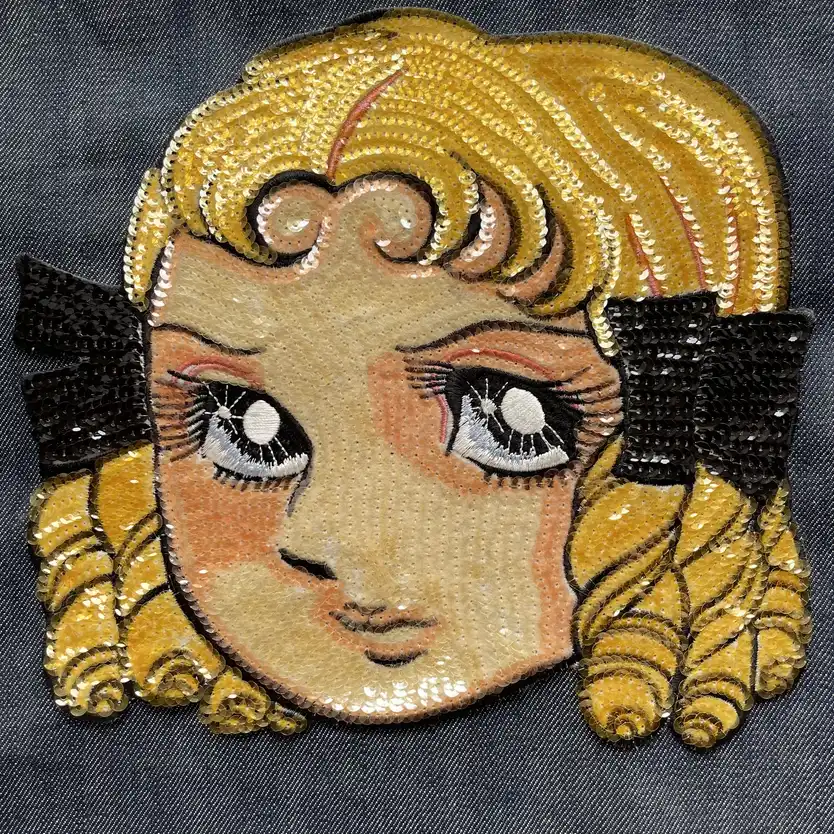
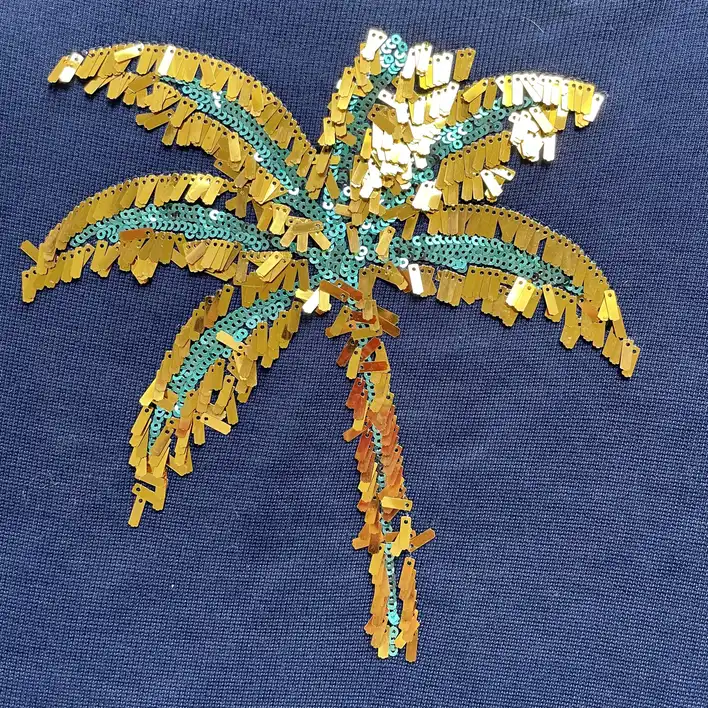
Sequin embroidery is a dynamic embroidery that makes garments “flow and shimmer” under light: computerized mechanical equipment precisely stitches individual round or shaped sequins into the stitching like scales, refracting flowing luster as the wearer moves and the light angle changes. It is one of the most eye-catching techniques in apparel.
In trend apparel and accessible luxury womenswear, sequin embroidery has evolved from purely eveningwear shine decoration into a core design element for youth-oriented streetwear, retro aesthetics, and playful interactive designs (such as two-color reversible flip sequins).
Ordinary flat embroidery is “painting color with thread”; sequin embroidery is “capturing light with sequins.”
II. Common Names and Terminology Distinctions (Important—Don’t Get Confused by the Names)
In the market and international sourcing, sequin processes have several professional names:
| Industry Term | English Equivalent | Term Origin and Emphasis |
|---|---|---|
| Sequin Embroidery / Paillette Embroidery | Sequin / Paillette Embroidery | The most widely used standard term, emphasizing the reflective round or polygonal sequin structure. |
| Flip Sequin Embroidery / Iridescent Double-Sided Embroidery | Reversible / Flip Sequin Stitch | Refers to double-sided, two-color sequins that can be flipped freely by hand to switch the color or pattern on the front and back. |
| Dangle Sequin Embroidery / Swing-Bead Sequin | Dangle Sequin / Hanging Paillette | Sequins are fixed at a single point and hang freely, swaying with body movement. |
| Overlapping Sequin Embroidery / Fish-Scale Embroidery | Overlapping / Fish-scale Sequin | Sequins are layered at a 30%–50% overlap ratio, presenting a tight, flat, fish-scale-like reflective surface. |
Key process boundaries to clarify:
- Sequin embroidery ≠ beading: Sequins are flat, thin pieces (large reflective area, flickering in a “surface” manner); beading uses three-dimensional solid glass seed beads or bugle beads (crystalline in a “point” manner with refractive effects).
- Sequin embroidery ≠ hot-fix rhinestones / hot-fix transfers: Hot-fix rhinestones are attached to the fabric with hot-melt adhesive backing and may lose adhesive or stones during washing; sequin embroidery uses wear-resistant monofilament or polyester thread with fully mechanical lock stitching for a secure, wash-resistant structure.
- Sequin embroidery ≠ glitter powder printing: Glitter powder consists of fine chips bonded with glue and is prone to shedding and fading; high-quality PET sequins are heat-resistant, UV-resistant, and scratch-resistant.
III. Principles and Forming Technology: How Is It Made?
Modern computerized sequin embroidery has moved away from inefficient manual hand sewing and relies on independent sequin feeders on specialized embroidery machines for efficient formation:
- Automatic Feeding of Roll-Fed Sequin Tape: High-toughness roll-fed sequin tape with fixed-interval perforations is used; the feeder’s stepper motor and the needle move in sync, feeding one sequin before each needle drop.
- Needle Tip Threads Through the Center Hole: The needle precisely passes through the center hole (or edge hanging hole) of the sequin, carrying the top thread into the base fabric.
- Three-Stitch or Two-Stitch Self-Locking Stitch: The needle makes two to three consecutive stitches at the sequin edge (commonly a flat lock, herringbone lock, or wheat-ear lock) to lock each sequin firmly in place.
- Two-Color Flip-Sequin Digitizing and Layout: Double-sided, two-color flip sequins require strict control of sequin spacing and overlap ratio (approximately 35%–40%) to keep flip resistance moderate and flipping smooth.
IV. Effect Specifications (Standard Capability Range)
| Process Control Item | Standard Capability Metrics | Design and Engineering Notes |
|---|---|---|
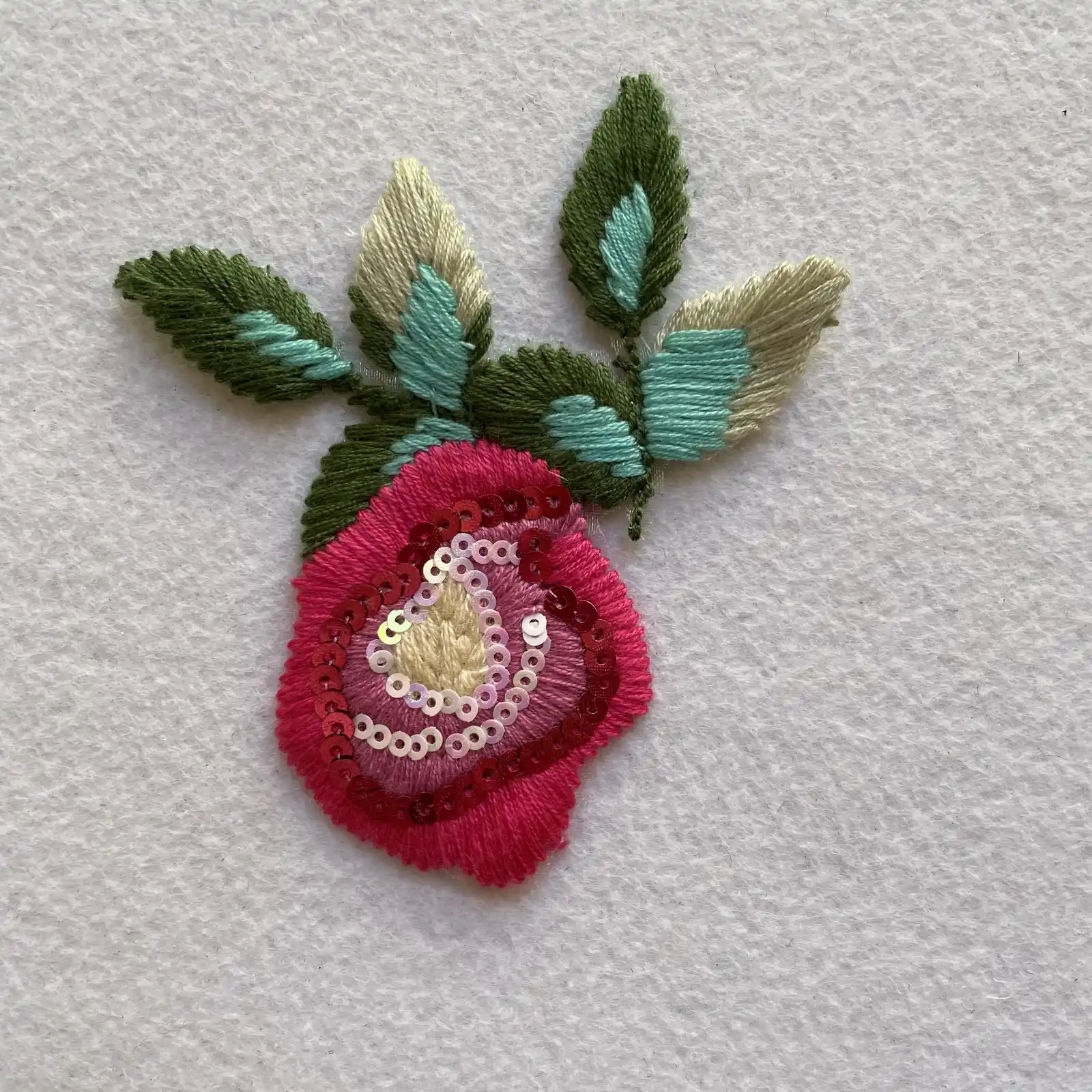
| Common sequin sizes | 2.0mm, 3.0mm, 4.0mm, 5.0mm, 7.0mm, 9.0mm | Common 3mm/5mm flat sequins; small sequins are delicate and suitable for portraits, while large sequins are eye-catching and suitable for large lettering. |
| Sequin materials and luster | Eco-friendly PET (heat resistant to 160°C), acrylic, metallic-effect sequins | High-gloss mirror, matte frosted, rainbow iridescent, fluorescent holographic, and milky semi-transparent finishes. |
| Sequin shapes and types | Round flat sequins, concave cup sequins (Cup), square sequins, heart-shaped sequins, elongated dangling sequins. | Cup sequins refract light with a more three-dimensional and diffused effect; flat sequins feel smoother and sit closer to the fabric. |
| Overlap rate (Overlap) | 20% – 50% adjustable | High overlap gives a visually dense effect; low overlap gives a light, breathable effect. |
| Minimum line width | Recommended ≥ sequin diameter × 1.5 | For a single row of 3mm sequins, recommended stroke width ≥ 4.5mm. |
| Washing and care recommendations | Recommended: turn the garment inside out, place it in a laundry bag, and wash gently at ≤30°C; avoid high-temperature tumble drying and direct ironing on the sequin surface. |
V. Hand Feel and Visual Appearance: What Makes It Stand Out (Pros & Cons Trade-offs)
Key advantages (Pros):
- Dynamic luster that makes it a visual focal point: Creates flowing light refractions under natural light and stage spotlights, with strong premium appeal.
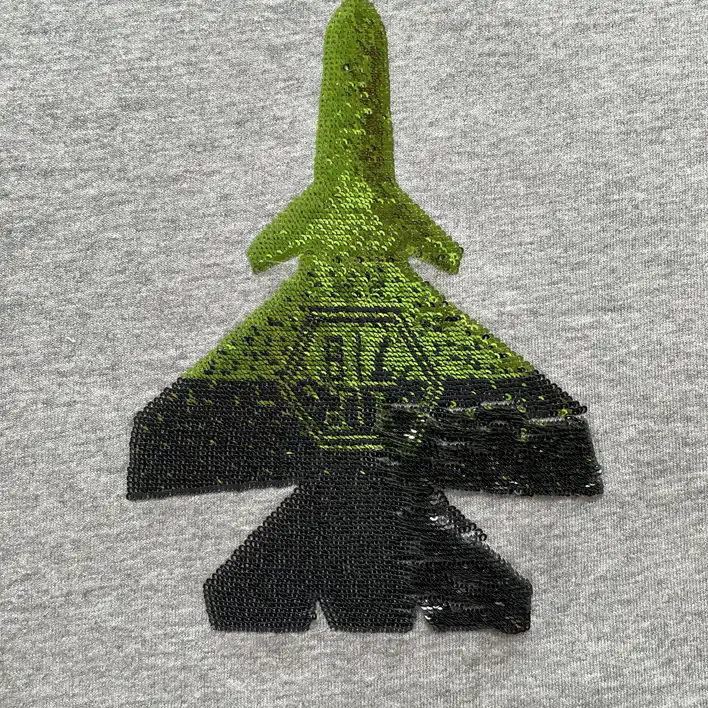
- Interactive fun experience: Two-color reversible sequins allow fingertip drawing to change patterns, adding interactive fun and social talking points to garments.
- Good color weather resistance: High-quality eco-friendly PET coated sequins are less prone to oxidation and darkening, with long-lasting, stable color.
Process boundaries and physical limitations (Cons):
- Anti-abrasion protection needed for close-to-skin wear: Sequin edges have a slightly firm texture; the inside of close-fitting garments needs a soft interlining layer.
- Avoid areas subject to frequent, intense friction: Large-area sequin designs are not recommended for underarms, inner cuffs, and other areas subject to continuous friction.
VI. Suitable Fabrics and Application Guide (Garment Placement Guide)
Common embroidery placements on garments and recommended sizes:
- Main front graphic for streetwear hoodies: Recommended size 18–28 cm; large-format reversible sequins or gradient sequins express streetwear brand character.
- Front badge for fashion baseball caps and knit beanies: Recommended size 5–8 cm; high-density, compact sequin-embroidered fabric badge.
- Shoulder/neckline accents for accessible luxury dresses and eveningwear: Recommended line width 3–6 cm; transparent iridescent sequins create a subtle, shimmering pearlescent effect.
- Large-area back patchwork for trendy denim jackets: Recommended size 25–35 cm; rugged washed denim contrasts with sequins.
Recommended fabrics: Woolen fabric, denim, heavyweight cotton knit (300g+), sweatshirt fabric, polyester trench coat fabric, leather, and felt patch backing materials.
VII. Variations and Combined Techniques (One Design Can Use Multiple Techniques Simultaneously)
Sequin embroidery is often mixed with various embroidery techniques to break away from a single flat look:
- Sequin embroidery + chenille embroidery: Soft, fluffy chenille loops outline the border or background pattern, with glossy sequins filling the interior; one matte and one glossy, creating clear layering.
- Sequin embroidery + standard flat embroidery: Flat embroidery handles hair strands, contour shadows, and fine lettering, while sequins handle jewelry and highlight areas, combining bold and fine details with complementary layering.
- Sequin embroidery + machine beading: Sequins are laid flat as a base, with sparkling three-dimensional glass seed beads stitched over the top, presenting the premium texture of heavy bead embroidery.
- Sequin embroidery + appliqué embroidery: A large-area appliqué base reduces embroidery weight, while localized dense sequin placement adds highlights, balancing visual effect and cost.
VIII. Selection Comparison Table (See How to Choose in One Table)
| Reflective Technique | Reflective Mechanism & Visual Effect | Hand Feel & Flatness | Wash Durability | Typical Application Styles | Cost Range |
|---|---|---|---|---|---|
| Computerized sequin embroidery | Mechanical sequins reflect light with a flowing, mirror-like shimmer | Fish-scale feel, slightly raised profile | Sturdy construction, suitable for normal machine washing | Trend-driven sweatshirts, eveningwear, badges | Medium |
| Machine-set glass bead beading | Solid glass beads refract light for a clear, lustrous finish | Hard raised granules, heavy-craft look | Avoid violent impact from hard objects | Heavy-craft womenswear, luxury gowns, streetwear labels | High |
| Flat metallic thread embroidery | Woven metallic thread reflects light with a subtle, low-sheen glow | Flat against the body, no foreign-object feel | Very high resistance to washing and abrasion | Premium brand labels, fine metallic lettering | Low–medium |
| High-temperature heat-transfer rhinestones | Glued faux crystals create single-point refraction | Point-level raised texture, glue-like feel | Glue and stones may come loose with frequent washing | Value womenswear, heat-transfer lettering | Low |
9. Design & Pattern-Making Essentials (6 Pitfall-Avoidance Rules for Designers)
- Match sequin size to motif detail: For fine motifs under 10 cm, choose 2 mm–3 mm micro sequins where possible; for large colour blocks, use 5 mm or larger to increase visual impact.
- Keep clear of seams and stitch lines: Leave a clearance of at least 15 mm between the motif and the garment's cut edge and seam lines, so the presser foot does not crack sequins or break needles.
- Use strong lightness contrast on reversible sequins: For two-tone reversible sequins, aim for a lightness difference of ≥ 40% between the two faces (e.g., black/gold, blue/silver, red/black) so the flip effect has real impact.
- Use lock stitches to prevent snagging and shedding: Pattern files should include a 3-stitch backstitch lock (Lock Stitch) at the end of key outlines to prevent thread runs that can lead to sequins shedding in a chain.
- Factor in base-fabric stretch and shrinkage compensation: Stretch knits contract slightly in the width direction when densely covered with sequins; pattern makers should apply 2%–4% reverse compensation in advance.
- Prevent scratching at skin-contact areas: For children's wear or close-fitting garments, avoid sharp-cornered shaped sequins during pattern making, or add a soft anti-abrasion backing pad to the finished garment.
10. Business Cooperation: MOQ, Sampling & Lead Times
- MOQ: MOQ from 300 pieces (multi-colour combinations can be split into batches).
- Sampling lead time: After vector artwork confirmation, first samples typically in 24–48 hours; complex multi-technique sampling in 3–4 working days.
- Sampling fee policy: Up to 3 simple samples free of charge; complex samples incur a sampling fee, which is fully credited against the order once bulk orders reach the MOQ of 300 pieces.
- Bulk production lead time: After sealed sample approval, bulk orders are typically delivered within 5–10 working days, with automated full inspection and professional soft-paper interleaf packaging to prevent scratches.
11. FAQ
Q1 | Do sequins come loose or threads unravel easily? Can the garment be machine washed?
Dobest uses high-strength tensile monofilament combined with multiple computerized lock-knot techniques, with each sequin individually locked, so it resists coming loose under normal wear and friction. For washing, turn the garment inside out, place it in a fine mesh laundry bag and wash in room-temperature water (≤ 30°C). Avoid strong alkaline detergents and high-temperature tumble drying or pressing.
Q2 | Will reversible sequins get stuck and stop flipping after extended use?
Smooth flipping depends on sequin pitch and overlap rate. We have over ten years of reversible-sequin pattern-making experience and keep overlap strictly within the optimal damping range — preventing natural loosening and show-through of the base fabric while allowing a light finger swipe to flip smoothly.
Q3 | Can sequin embroidery be applied to highly elastic yoga wear or swimwear?
Sequins themselves are rigid and non-stretch, and highly elastic fabrics under strong stretch can cause the sequin surface to arch. For high-stretch garments, we recommend making a separate embroidered patch on an elastic backing and then sewing it on, or designing with sparser sequin placement in selected areas.
Q4 | Will sequins melt or shrink at the edges during high-temperature ironing?
We use eco-friendly PET sequins rated for temperatures above 160°C, which perform noticeably better under heat than ordinary PVC sequins. When pressing finished garments, we recommend low-temperature steam pressing on the reverse side, avoiding direct heat on the sequins.
12. Contact Us
Dongguan Dobest Industrial Co., Ltd. (Dobest) was founded in 2013 and has focused on the R&D and manufacturing of specialty computerized embroidery for 13 years. We operate a 3,000 m² modern production facility with more than 30 specialty computerized embroidery machines. We have passed Disney ILS and adidas SEA factory audits for international brands and have been rated an A-class taxpayer for four consecutive years. We support custom development from your drawings and samples, plus fast-response sampling.
Service hotline / WeChat: 13712297700 | Official website: dobest.hk | Submit a sampling request online
Service Area (On-Site Visits in the Pearl River Delta)
We can visit customers on site in Pearl River Delta cities including Dongguan, Shenzhen, Foshan (including Shunde), Zhongshan, Guangzhou, Zhuhai, Huizhou and Jiangmen. For Guangzhou's urban districts and surrounding areas (Haizhu, Liwan, Tianhe, Baiyun, Huangpu, Panyu, Huadu, Nansha, Conghua and Zengcheng), as well as Dongguan's own towns and subdistricts (Humen, Houjie, Chang'an, Dalang, Changping, Dalingshan, Shipai, Chashan, Tangxia, Liaobu, Dongcheng, Nancheng, Wanjiang and others), we can usually visit within half a working day to discuss your project and review samples. Clients outside the region and overseas can send samples by courier and get them returned.

 2/F, Bldg E, Jinmao Xincheng, No.7 Jiedong South Rd, Xiaojiejiao, Humen, Dongguan, Guangdong, China
 mclau@dobest.hk