



 You are here:
Can Toothbrush Embroidery Be Washed? What Really Happens to the Pile
 Release time:2026-11-14
 Views:
Written by Liu Ronghui | Dongguan Dobest Industrial Co., Ltd., Founder & Technical Director Last updated: 2026-11-14
Toothbrush embroidery is the technique buyers ask about most carefully before placing a bulk order — not because it is hard to make, but because it is a raised pile. Raised means there is something standing up off the fabric, and anything standing up invites the same question: will it survive the wash?
This guide answers that question the way we answer it for our own customers: what holds the pile in place, what we actually test, what changes after repeated washing, and which design decisions make the difference between a patch that stays crisp and one that goes fuzzy.
1. The short answer
Yes — toothbrush embroidery can be washed, and it is less prone to shedding after washing than a loose loop or a cut-and-stitched pile that has not been locked.
Three conditions decide the outcome:
1. The pile is locked at the base, not merely cut and left standing. 2. The backing matches the fabric it sits on — a rigid backing on a stretch knit is a shedding risk, not a durability feature. 3. The wash method matches the product — a cap and a kidswear chest patch do not get the same treatment.
Get those three right and the pile keeps its height and its edge definition through normal domestic washing. Get them wrong, and no amount of "premium thread" will save it.
2. What actually holds the pile in place
2.1 The pile is formed, then locked
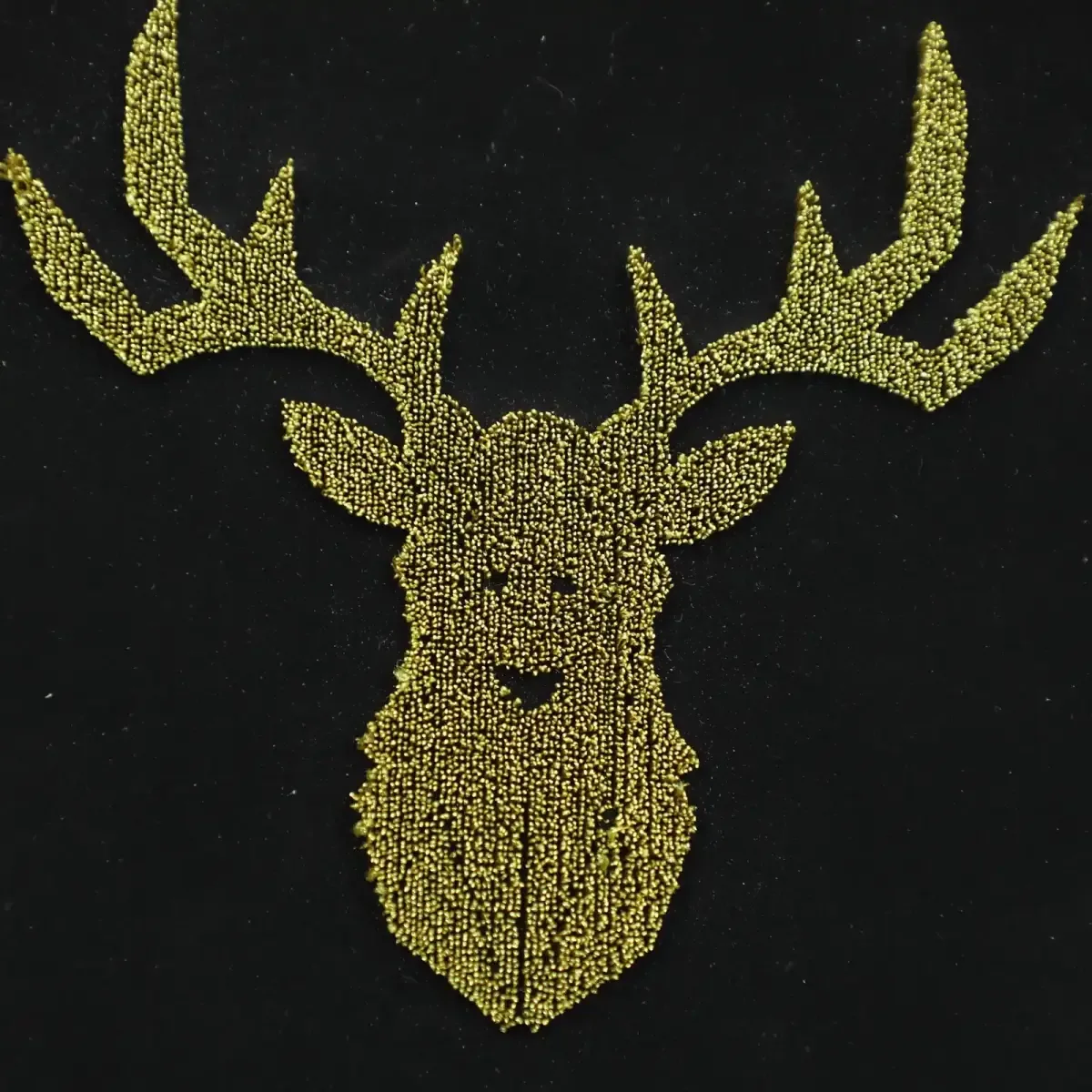
Toothbrush embroidery builds a dense vertical pile — typically 1.0 mm to 10.0 mm depending on the design — and then locks the base of that pile with a TPU heat-lock step before the surface is sheared to its final height. The heat-lock is what stops individual fibres from working loose later.
Without that lock, the pile is only held by stitch tension. It looks identical on the sample table and behaves completely differently after ten washes.
2.2 Shearing is a finishing step, not a shortcut
After locking, the surface is sheared to a consistent height. Shearing is what gives toothbrush embroidery its even, velvet-like face — and it is also where poor process shows up. An uneven shear leaves longer fibres that catch on other garments in the drum and pull free earlier.
2.3 Backing is the hidden variable
The backing is where most "shedding" complaints actually originate:
| Backing type | Best for | Wash behaviour |
|---|---|---|
| Backing-free | Babywear, stretch knits, lightweight tees | Softest hand-feel; relies entirely on stitch structure, so design density matters |
| Heat-seal (hot-melt) | Outerwear, bags, woven shirting | Strong bond on stable fabrics; not suitable for heat-sensitive shells |
| Sew-on border | Caps, heavy canvas, items washed rarely | Most mechanically secure; adds a visible stitched edge |
| Velcro / hook-and-loop | Removable patches, uniforms | The hook side abrades pile if stored face-to-face — a storage issue, not a wash issue |
| Reusable soft adhesive | Retail display, temporary branding | Not intended for repeated machine washing |
If a buyer specifies "must survive industrial laundering" and the artwork is on a stretch jersey, the correct answer is to change the backing — not to add more stitches.
3. How we test wash durability
We do not publish a single "wash-proof" claim, because the honest answer depends on the construction. What we do is run the same protocol on every new toothbrush development and record what changed.
| Test | Method | What we look for |
|---|---|---|
| Domestic wash | 40 °C, gentle cycle, mild detergent, 30 cycles | Pile height loss, edge fraying, fibre transfer onto a white control cloth |
| Warm wash | 60 °C, standard cycle, 10 cycles | Heat-related shrinkage of the base fabric, adhesive softening on heat-seal backings |
| Tumble dry | Low heat, 20 minutes, 5 cycles | Pile flattening that does not recover after brushing |
| Line dry | Ambient, 24 hours | Colour bleed from dark pile onto light ground fabric |
| Abrasion | Reciprocating rub against the same pile, 500 cycles | Surface fuzzing on the high points of the design |
Two things matter more than any single number:
- Pile height loss is normal and usually acceptable. A 6 mm pile may read as 5 mm after a season of washing. What is not acceptable is uneven loss, where part of the design collapses and part stays upright.
- Fuzzing is not shedding. Surface fibres matting together is cosmetic; fibres detaching from the base is structural. Buyers often report the first as the second.
Results vary by design, thread, backing and wash programme. Final performance is confirmed on your own sample, not on a general claim — this is why we sample before bulk.
4. Care guide by product type
| Product | Wash | Dry | Avoid |
|---|---|---|---|
| Kidswear / babywear (backing-free) | 30–40 °C, gentle, inside out | Line dry | Fabric softener on the pile; high-heat tumble |
| Hoodies / sweatshirts (3.0–6.0 mm pile) | 40 °C, normal, inside out | Line dry or low tumble | Washing with Velcro, zips or open hook tape |
| Caps and beanies | Spot clean or hand wash | Air dry over a form | Machine tumble — the brim loses shape before the pile does |
| Bags and backpacks | Spot clean, damp cloth | Air dry | Full immersion on heat-seal backings |
| Footwear uppers | Spot clean only | Air dry away from direct heat | Machine washing |
One practical note that saves a lot of complaints: turn the garment inside out and close all hook-and-loop fasteners before washing. Most pile damage we see in returned samples is mechanical abrasion from the drum, not adhesive failure.
5. Design choices that reduce shedding risk
If durability is a hard requirement, these four decisions matter more than the thread brand:
1. Keep the pile inside the motif, not on its edge. A sheared edge holds better than a pile edge. Where the design allows, finish the outline in flat satin and keep the pile in the interior. 2. Respect minimum stroke width. Very thin pile elements have too little base area to lock reliably. Below roughly 2 mm of stroke width, switch that element to flat embroidery. 3. Match density to pile height. Taller pile needs a denser lock pass. A 10 mm pile built with the density used for 3 mm is a predictable failure. 4. Choose the backing for the fabric, not for the sample table. The sample will look perfect either way; only the wash reveals the difference.
6. FAQ
Does toothbrush embroidery shed after washing? It is less prone to shedding than an unlocked pile, because the base is heat-locked before shearing. Some surface fuzzing over time is normal. Actual fibre loss indicates a construction or care problem, not the technique itself.
Can it go in a tumble dryer? Low heat, short cycle, and only for stable woven products. High heat flattens the pile and can soften heat-seal adhesive.
Is dry cleaning safe? Generally yes for wool and outerwear, but solvent choice affects some adhesives. Tell us the intended care label at sampling stage and we will match the backing to it.
Will the colour fade? Pile takes dye the same way flat thread does. Dark pile on a light ground is the combination to watch, because even slight bleeding is visible. We test colour bleed on every new dark-pile development.
How do I check before committing to bulk? Ask for a wash-tested sample, not a display sample. We will run the protocol in section 3 on your design and send you the before/after photographs together with the physical sample.
7. How we sample and verify
- MOQ: 300 pieces for standard toothbrush work; below 300 is reviewed case by case.
- Sampling: 24–48 hours for standard crafts; 3–4 working days for complex multi-craft combinations.
- Free samples: up to 3 simple samples, with complex setup fees credited against a bulk order at our 300-piece MOQ.
- Bulk lead time: 5–10 working days after sample approval.
- Audits: we have passed Disney ILS and adidas SEA factory audits.
Send us the artwork and tell us how the product will be washed. We will come back with a construction that survives that care label — and a sample you can put through your own wash test before you commit.
Next step: send us the artwork and the care label, and we will return a construction that survives that wash programme plus a physical sample you can test yourself. Request a wash-tested sample — standard sampling is 24–48 hours.

 2/F, Bldg E, Jinmao Xincheng, No.7 Jiedong South Rd, Xiaojiejiao, Humen, Dongguan, Guangdong, China
 mclau@dobest.hk