

 You are here:
What Is Wallcovering Mural Embroidery? Process Principles, Large-Format Specifications, and Selection Guide
 Release time:2026-10-16
 Views:
[Core Definition and Quick Selection Guide] Wall mural embroidery (also called embroidered wallcovering, embroidered mural, three-dimensional calligraphy and artwork embroidery, or soft-furnishing embroidered artwork) is a spatial art that scales computerized embroidery to a full-wall format, using multiple combined stitch techniques to create a dimensional, well-defined image with lively thread sheen across the entire wallcovering. Dobest, as a source factory, supports MOQ from 300 pieces, free simple samples for 3 designs, standard sampling in 24–48 hours, and bulk production in 5–10 business days. It is suitable for soft-furnishing spaces such as hotel feature walls, private clubs, showrooms, and villa foyers.
1. In One Sentence
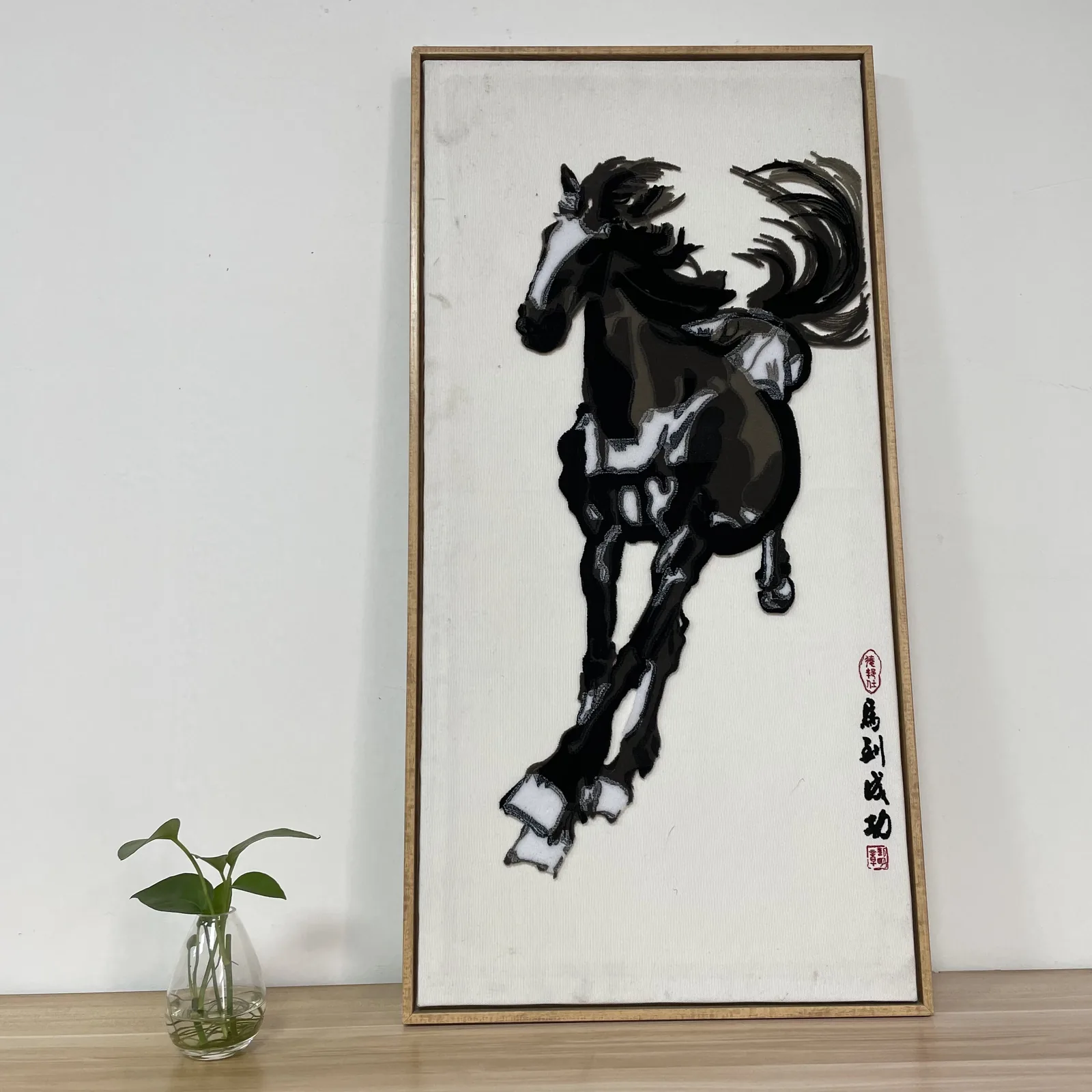
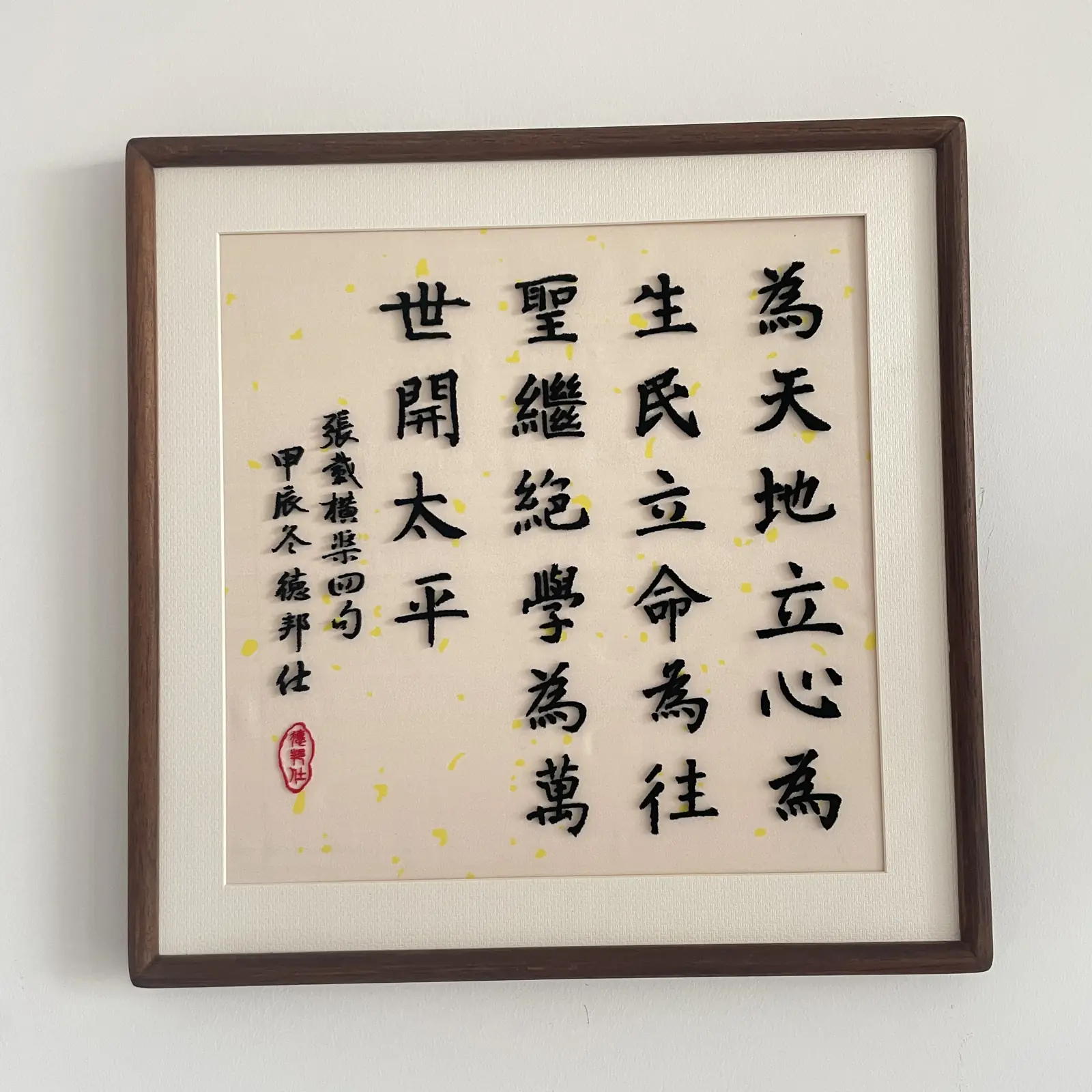
Wall mural embroidery scales computerized embroidery from “a piece of fabric” to “an entire wall”: it does not print the motif onto the wall; instead, embroidery threads create a three-dimensional, light-responsive, tactile image across the full wallcovering. From a distance, it reads as a complete artwork; up close, it is an artwork with stitch texture.
Traditional wall decoration relies on wallpaper, paint, or printed graphics, producing flat images without material variation. Wall mural embroidery gives walls genuine dimensionality and tactile quality: as indoor light shifts, the threads reflect layered, flowing sheen, an effect difficult for printed coatings to reproduce.
Ordinary wallpaper is a “printed flat pattern”; wall mural embroidery is a “stitched three-dimensional image.”
2. Common Names and Terminology (Important: Avoid Getting Confused by Names)
In soft-furnishing and project procurement discussions, this craft has several trade terms and names:
| Industry Term | English Equivalent | Origin and Emphasis |
|---|---|---|
| Wall mural embroidery | Wall Mural Embroidery | The standard industry term, emphasizing embroidery scaled to mural size. |
| Embroidered wallcovering / seamless embroidered wallcovering | Embroidered Wallcovering | Named after the base fabric format, highlighting roll delivery and full-width installation. |
| Embroidered mural / embroidered decorative artwork | Embroidered Wall Panel | Named after the finished-product format, highlighting display qualities as hanging artwork or scroll-style pieces. |
| Three-dimensional calligraphy and artwork embroidery / soft-furnishing embroidered artwork | Textile Wall Art | Emphasizes Eastern motifs such as calligraphy and painting and coordination with soft furnishings. |
| Architectural embroidered rigid panel | Architectural Embroidered Panel | Refers to the project practice of laminating an embroidered face onto a rigid backing; emphasizes backing lamination and installation characteristics. |
Process boundaries to clarify:
- Embroidered murals are not digital-printed wallpaper: printing is flat, with lower cost and faster lead times, but lacks dimensionality and hand feel; embroidered murals have real stitch texture and light-and-shadow layering, with markedly different material quality and premium potential.
- Embroidered murals are not hand-embroidered murals: hand embroidery is completed stitch by stitch by hand, with collectible value but lead times measured in months and higher prices; computer-controlled embroidered murals use computerized embroidery machines for efficient reproduction, with more controllable cost and lead times, making them suitable for volume projects.
- Embroidered murals are not soft padded panels built purely on filling: soft padded panels rely mainly on filling materials to create raised areas, with more limited pattern expression; embroidered murals form images through the thread paths themselves, offering stronger motif and detail expression.
A candid note on “seamless”: Embroidery machines have limited working widths, and images larger than the working width need to be embroidered in sections and then joined. What we can achieve is “visual seamlessness”: seams are placed in concealed areas of the design, rather than there being no physical seams at all.
3. Principles and Forming Technology: How Is It Made?
The technical challenge lies not in “how to embroider” but in “how to join limited embroidery widths into one large image” and “how to keep the fabric from shrinking or deforming under tens of millions of stitches.” Dobest completes the production of large-format embroidered murals through the following four core process steps:
- Sectional embroidery: Divide the large design into units according to machine width, establish a unified coordinate system for each, and complete embroidery section by section so that stitch density and color/sheen stay consistent across each unit.
- Precision joining: Join the sectional units into a full piece using a unified alignment datum; carry out a pre-joining trial before final joining, place seams in concealed areas of the design, and achieve “visual seamlessness.”
- Hybrid composition (printed base + localized embroidery): Complete large background areas with digital printing or inkjet printing, and embroider just the core motifs that need dimensionality and texture, controlling cost while highlighting the main visual.
- Backing lamination and setting: After embroidery, the base fabric undergoes backing lamination and setting treatment so that during wall installation it resists edge lifting, shrinkage, and deformation.
4. Effect Specifications (Standard Capability Range)
| Process Control Item | Standard Capability Metric | Design and Engineering Notes |
|---|---|---|
| Finished Size | Customized to Net Wall Dimensions | On-site measurement is required; socket and switch positions should also be incorporated into the composition. |
| Joining Method | Panel-by-Panel Embroidery + Precision Joining | Seams are positioned in discreet areas of the design; physical seams are inherent. |
| Base Substrate | Seamless wallcovering, decorative canvas, suede wallcovering, flame-retardant engineered substrate | Needs to meet dimensional stability and puncture resistance; the flame-retardant rating is selected to project requirements, subject to the test report. |
| Minimum Line Width | Recommended ≥ 1.5 mm | Fine text and geometric lines need clear definition. |
| Weathering and Abrasion Resistance | Lightfastness and abrasion testing according to project contract | Walls receive prolonged light exposure, so threads need to meet lightfastness requirements. |
| Delivery Format | Full-piece roll or numbered panel packaging | Transport and stair access should be considered; avoid fold marks. |
5. Hand Feel and Visual Impression: What Makes It Stand Out (Pros & Cons Trade-offs)
Core Strengths (Pros):
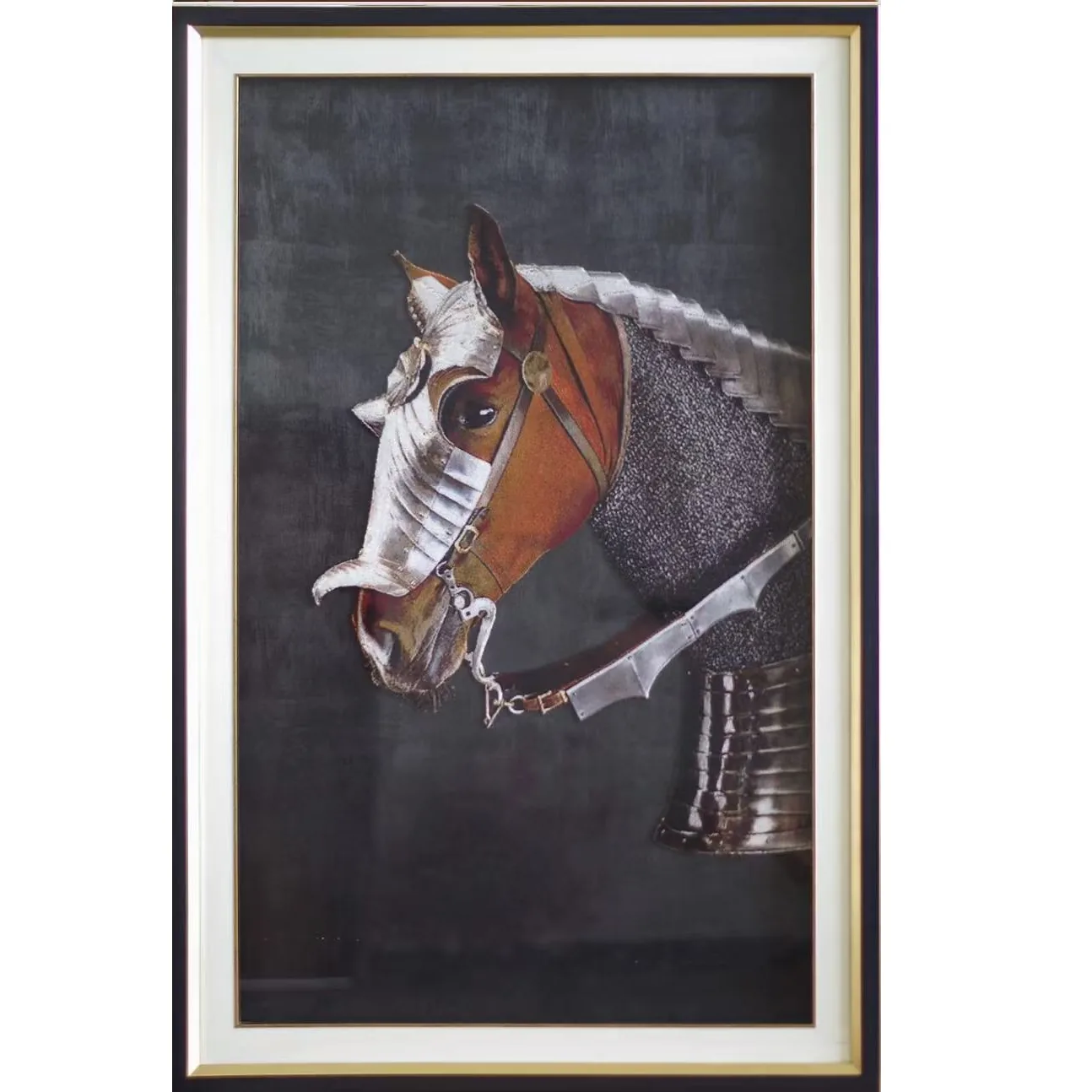
- Three-Dimensional Light and Shadow, Vivid Layering: As light shifts, the embroidery threads refract a flowing sheen, turning the wall from a “flat background” into a three-dimensional image with relief, light and shadow, and texture.
- Tactile Texture: Up close, the relief of the stitches can be felt; this “tactile artistic quality” is why high-end hotels, clubs and private residences are willing to pay a premium.
- Freedom of Subject Matter and Strong Premium Potential: Eastern ink wash, blue-and-green landscapes, geometric abstraction and brand visuals can all be expressed; it is especially adept at conveying the power of “line and texture,” with notable commercial value and brand character.
Process Boundaries and Physical Limitations (Cons):
- Physical Seams Are Inherent: Limited by machine width, oversized images require joining; a physically seamless result is not achievable, so seam positions need to be planned at the design stage.
- Higher Cost and Installation Requirements: Large-format embroidery, joining, backing lamination and installation coordination involve many steps; project budgets and on-site installation conditions need to be assessed in advance, and rushed starts are not advisable.
6. Suitable Substrates and Applications (Space and Substrate Guide)
This technique is mainly used for wall decoration and soft-furnishing spaces. Suitable substrates and spatial applications are as follows:
Suitable Substrates:
- Seamless Wallcovering / Decorative Canvas: Large format and dimensionally stable; a commonly used embroidery base fabric.
- Suede Wallcovering: Combined with brushed-pile processing, it offers a soft hand feel and some sound absorption, suitable for private rooms and home theaters.
- Flame-Retardant Engineered Substrate: Selected to the flame-retardant rating required by the project for public spaces such as hotels and exhibition halls; the specific rating and test report are confirmed per project.
Suitable Spatial Applications:
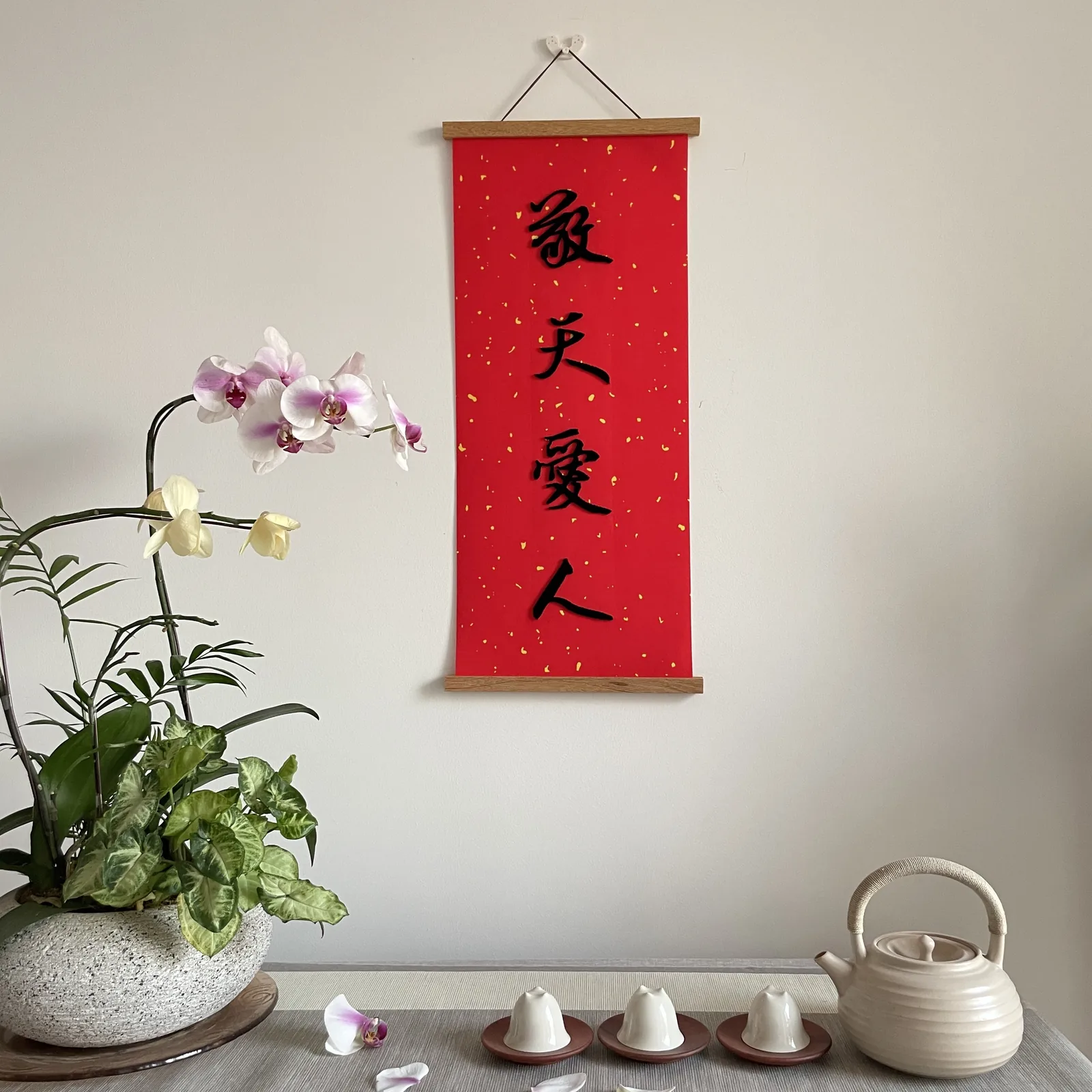
- Residential Soft Furnishings: Living room feature walls, bedroom headboard feature walls, entryways, and hanging scrolls for tea rooms and studies.
- Hotels and Clubs: Lobby feature walls, corridor decoration, private-room walls, banquet-hall decorative surfaces.
- Commercial Spaces: Brand store image walls, showroom backgrounds, office decoration.
- Culture and Exhibitions: Museum exhibition decoration, art exhibition walls, cultural walls.
7. Variants and Combined Techniques (One Design Can Use Multiple Techniques at Once)
Wallcovering mural embroidery can serve as a base and be combined with other techniques to create richer layering:
- Printed Base + Localized Embroidery: Large background areas are completed with digital printing, while the core main visual is highlighted with embroidery; it looks complete from a distance and textured up close, making it a mainstream solution that balances cost-effectiveness and effect.
- Panel-by-Panel Embroidery + Precision Joining: When pursuing a full-width handcrafted feel, the entire design is embroidered in panels and then joined, suitable for high-budget fully embroidered images.
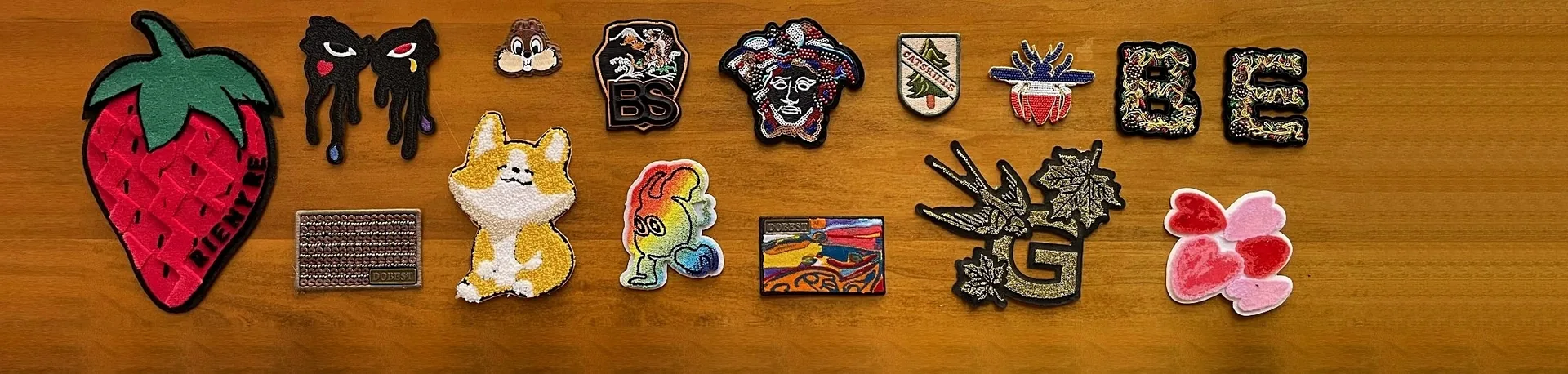
- Embroidery + Cord Embroidery / Chenille Embroidery / Toothbrush Embroidery: Add three-dimensional cord, brushed-pile or brush-pile effects over the main design to enhance tactility and three-dimensional layering.
- Embroidery + Flat Metallic Thread / Beading: Accent with high-count flat metallic thread or hand-beading to create a luxurious feel, suitable for New Chinese and light-luxury spaces.
8. Selection Comparison Table (See How to Choose at a Glance)
| Process category | Dimensional and texture form | Hand-feel characteristics | Minimum line width | Recommended style fit | Relative cost |
|---|---|---|---|---|---|
| Printed base + localized embroidery | Core motifs dimensional; large areas in flat color | Localized hand feel; smooth main body | Approx. 1.5 mm | Hotel feature walls, showrooms, value-focused projects | Medium |
| Full-panel zoned embroidery with joining | Full-surface dimensional, fully stitch-covered | Full-surface tactile, rich texture | Approx. 1.5 mm | High-end private residences, collector-grade murals | High |
| Hand-embroidered mural | Dimensional, rich in stitch techniques | Handcrafted texture; not suited to mass replication | Finer detail, but longer lead time | Collector-grade art wall | Very high |
| Digital printed wallpaper | Flat, no dimensional effect | No hand feel | No line-width restriction | Large-area, low-cost installation | Low |
| Hard and soft upholstered wall panels | Raised by padding | Soft and elastic | Limited pattern expression | Spaces prioritizing tactile feel and sound insulation | Medium |
9. Design and Pattern-Making Essentials (6 Pitfall-Avoidance Rules for Designers)
- Establish the spatial coordinate system before drawing: First confirm wall dimensions, viewing distance, panel width, and the panel-joining grid; then decide the embroidery areas and negative space. For close-viewing projects, add detail; for long-distance projects, prioritize the main silhouette.
- Mark repeat units and seam alignment references for continuous patterns: When a pattern crosses panels, mark the repeat unit and seam alignment reference to keep the pattern continuous at joins.
- Do not treat “denser is more valuable” as the default: Excessive density increases weight, cost, drape, and cleaning difficulty. Localized accents are often easier to control and produce better results than full-surface high density.
- On-site measurement is essential: Wall dimensions, flatness, and outlet/switch positions all affect composition; pattern-making must be based on actual measurements.
- For localized relief, confirm roll-packing and installation impact: Verify whether 3D relief affects roll packing, transport, and wall flatness; if necessary, switch to a detachable modular structure.
- For height relationships in multi-layer materials, make a local sample first: Confirm the height relationships among the substrate, printed base image, pile surface, metallic thread, and beading with a local sample before bulk production.
10. Commercial Cooperation: MOQ, Sampling, and Lead Time
- MOQ: 300 pieces minimum (calculated by project area in square meters; multiple designs and areas can be reasonably combined in one order).
- Sampling lead time: After receiving dimensions, substrate, and artwork, standard samples are produced in 24–48 hours; complex multi-process composite samples in 3–4 working days.
- Sampling fee policy: 3 simple samples free; complex samples incur a sampling development fee, which is fully deductible from the order payment when the bulk order reaches MOQ 300 pieces.
- Bulk production lead time: After final sample approval, standard delivery is completed in 5–10 working days; project orders involve more stages—design, zoned embroidery, joining, and inspection—so a phased milestone plan will be provided after the proposal is confirmed.
11. FAQ
Q1 | Can it be made seamless across the full panel?
This depends on size. Embroidery machines have format limits; any part exceeding the machine format must be embroidered in sections and joined. We achieve visual seamlessness by placing seams in concealed areas of the pattern, but physical seams do exist, and we will make them as inconspicuous as possible.
Q2 | Will it deform after installation?
This depends on the dimensional stability of the backing fabric and the installation method. We use dimensionally stable substrates and provide installation recommendations at delivery, including allowing extra margin, controlling adhesive amount, and avoiding over-stretching; we also recommend a local on-wall test before full installation.
Q3 | Will colors fade?
Wall surfaces are exposed to light over the long term. We perform lightfastness and rub-fastness tests on wallcovering products to confirm compliance with agreed standards. However, under prolonged direct strong light, any material will undergo some degree of color change; this is an objective rule of materials science, and we will provide recommendations based on the use environment.
Q4 | Can it be washed?
Wallcoverings are generally dry-cleaned. Vacuuming, soft brushing, or localized gentle wiping is recommended; full-panel washing is not recommended. Specific cleaning methods will be provided in writing according to the substrate material and process.
Q5 | What tests are carried out on samples, and how is acceptance handled?
We recommend including small samples, key-area samples, and necessary 1:1 mock-ups. Test items cover shrinkage, stretching, edge curling, joining tolerance, weight, surface cleaning, abrasion, flame retardancy, or environmental requirements.
Q6 | How are sampling and lead time arranged?
Once dimensions, substrate and artwork are received, standard samples take 24–48 hours; complex multi-process samples take about 3–4 business days. Bulk production is delivered in 5–10 business days after the sealed sample is confirmed. Project orders also involve design confirmation, panel-by-panel embroidery, joining and inspection, so a phased milestone plan is provided once the proposal is confirmed.
Q7 | Can you carry out an on-site survey, and can we visit the factory?
Yes. The factory is in Humen, Dongguan (2/F, Building E, Jinmao New Town, No. 7 Jiedong South Road, Xiaojiejiao). For Pearl River Delta cities (Shenzhen, Foshan including Shunde, Zhongshan, Guangzhou, Zhuhai, Huizhou, Jiangmen and Dongguan townships) we can usually be on site within half a day. The visit covers net wall dimensions, surface flatness, and socket and switch positions, all of which feed directly into the composition and pattern-making.
Q8 | How is the price calculated?
It is calculated on finished area, then adjusted for the number of embroidered panels, the number of seams, the substrate and printed base process, the backing lamination method, and roll packaging and transport. Project orders receive an itemised quotation once the proposal and substrate are confirmed, avoiding repeated revisions later.
12. Contact Us
Dongguan Dobest Industrial Co., Ltd. (Dobest) was founded in 2013 and focuses on the R&D and custom development of specialty computerized embroidery and high-complexity embroidery. The company has a 3,000 ㎡ modern production workshop and more than 30 specialty computerized embroidery machines. It has passed Disney ILS and adidas SEA international brand factory audits and has received a Grade A taxpayer credit rating for four consecutive years. Where environmental and testing requirements are involved, raw materials are supplied with OEKO-TEX® Standard 100 and SGS test reports from suppliers, and we cooperate with customer-specified testing as needed.
Service hotline / WeChat: 13712297700 | Official website: dobest.hk | Submit a sampling request online
Service Area (On-site Support in the Pearl River Delta)
We can provide on-site support for projects throughout the Pearl River Delta: customers in Shenzhen, Foshan (including Shunde), Zhongshan, Guangzhou, Zhuhai, Huizhou, Jiangmen and local Dongguan can arrange on-site measurement and sample confirmation. For central Guangzhou and surrounding areas (Haizhu, Liwan, Tianhe, Baiyun, Huangpu, Panyu, Huadu, Nansha, Conghua, Zengcheng) and Dongguan towns and districts (Humen, Houjie, Chang'an, Dalang, Changping, Dalingshan, Shipai, Chashan, Tangxia, Liaobu, Dongcheng, Nancheng, Wanjiang), we can usually be on site within half a day. Clients outside the region and overseas can send samples by courier and get them returned.

 2/F, Bldg E, Jinmao Xincheng, No.7 Jiedong South Rd, Xiaojiejiao, Humen, Dongguan, Guangdong, China
 mclau@dobest.hk